
Whenever somebody asks how to find their aesthetic, the answers are almost always disappointing.
The advice is usually some variation of the same thing. Create a Pinterest board. Save outfits you like. Find a celebrity whose style you admire. Determine your color palette. Maybe take a personality test. Then, if all else fails, choose one of the many aesthetics currently being sold online and begin decorating yourself accordingly.
The problem is that none of these things actually answer the question.
An aesthetic is not something that can be purchased, assembled, or selected from a catalogue. It is not a costume, nor is it a trend. It is not a collection of objects that happen to belong to the same visual category. If it were, everybody would have a compelling aesthetic, and yet most people don’t. What people are usually searching for when they search for an aesthetic is not an aesthetic at all. What they are searching for is identity. They want to know who they are and, perhaps more importantly, how to express that person outwardly.
This is why so many people end up disappointed when they adopt an aesthetic they found online. The clothing is correct. The furniture is correct. The colors are correct. Everything appears to be in its proper place, and yet something still feels wrong. The aesthetic feels borrowed. It feels like a performance. It feels incomplete because it was built from appearances rather than meaning. People often mistake aesthetic for a visual formula when it is really the visible expression of a life.
Real aesthetic is not created from the outside in. It is created from the inside out.
Your aesthetic is the visible result of everything that has influenced you throughout your life. It is the accumulation of your interests, your fears, your aspirations, your memories, your ideals, the places you love, the books you return to, the people you admire, the periods of history that fascinate you, and the questions that refuse to leave you alone. Long before aesthetic becomes visible, it exists as a collection of influences quietly shaping the way you see the world.
In other words, your aesthetic has a history.
This is why I believe one of the best ways to discover your own aesthetic is not by studying influencers, trends, or mood boards. It is by studying art. Art teaches us something that aesthetics content rarely does. It teaches us where beauty comes from.
Artists understand something that many people forget. They understand that nothing appears without a cause. Every color, every shape, every gesture, every expression, every material choice, and every compositional decision is connected to something larger than itself. Nothing is wasted, and nothing is arbitrary. Even the smallest details often point toward a larger idea, influence, obsession, or belief that exists beneath the surface of the work.
The deeper I have studied art history, the more convinced I have become that aesthetic follows the same principle. Form follows meaning. Things look the way they do because of what they are attempting to express. Beauty does not emerge from nowhere. Beauty always comes from somewhere.
The easiest way to understand this is to look at artists. Not because artists are special, but because artists leave evidence behind. Their paintings become records of what they valued, feared, desired, admired, and believed. They reveal things about their creators that even the creators themselves may not fully understand. Art has a funny way of exposing us. Artists often believe they are creating paintings, but in reality they are creating self-portraits.
Not literal self-portraits, of course. Most of the time they are painting landscapes, lovers, strangers, saints, kings, flowers, rooms, or abstractions. Yet somehow they always end up revealing themselves anyway. Their obsessions, fears, desires, and worldviews inevitably find their way into the work. The painting becomes a reflection of the person who made it, whether they intended it to or not.
The same thing happens with aesthetic.
People often assume that aesthetic is something they choose, but aesthetic is really something they reveal. The reason certain colors appeal to you, the reason certain historical periods fascinate you, the reason certain interiors make you feel at home while others leave you cold, all of these preferences originate somewhere. They have roots. They are connected to experiences, influences, memories, and ideals that have been accumulating throughout your life.
If you want to understand your own aesthetic, you must first understand those roots. Before asking what aesthetic you should have, it is worth asking a different question entirely: what has been shaping your sense of beauty all along?
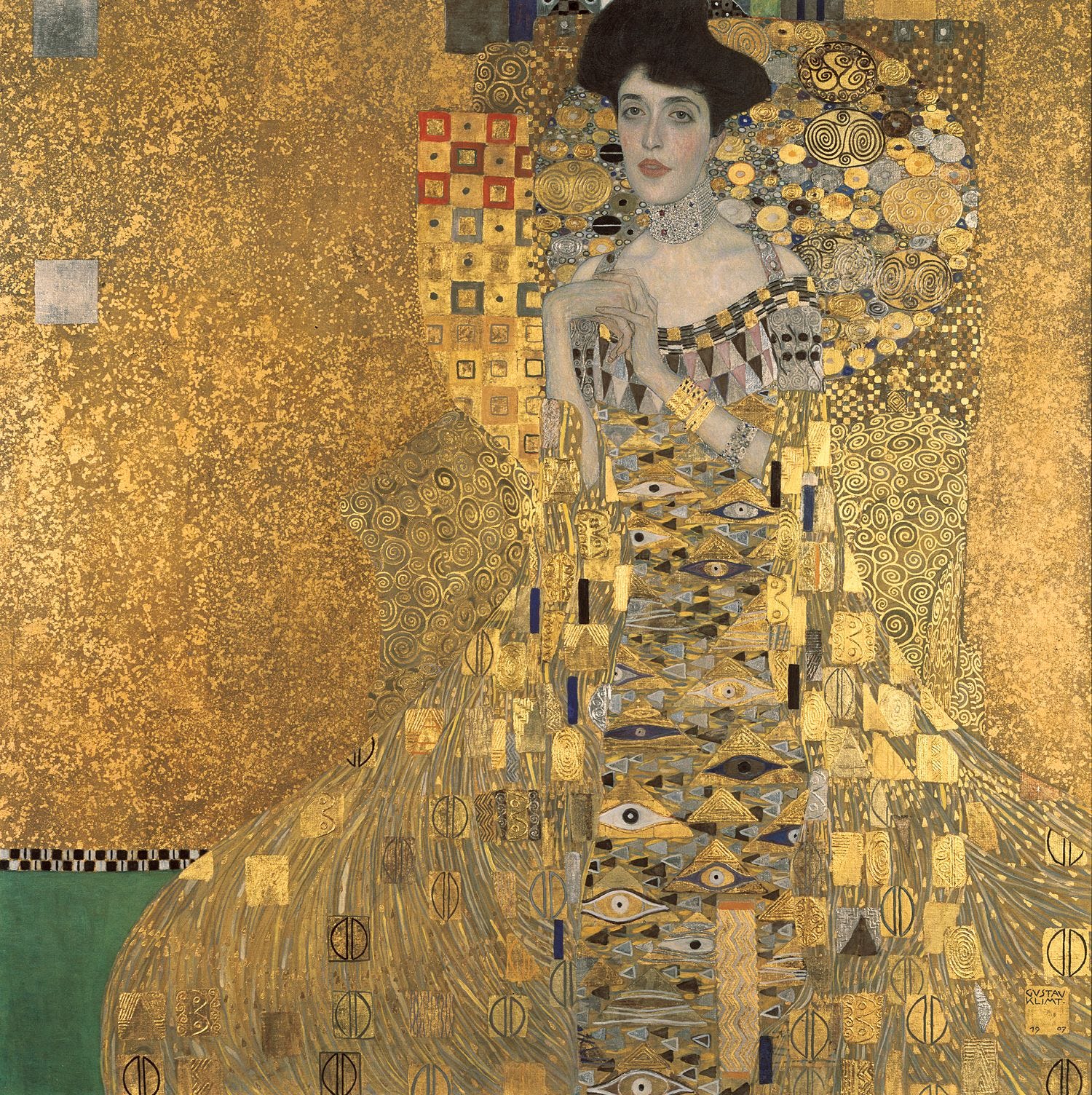
Take Gustav Klimt.
One of the most common descriptions of Klimt’s work is that it is decorative. People see the gold leaf, the elaborate patterns, the ornamentation, and the luxurious surfaces and assume that the beauty of his paintings comes from decoration alone.
This is a mistake.
Nothing in Klimt’s work is decorative in the shallow sense of the word. The gold did not appear because he wanted something beautiful to look at. The geometric patterns did not appear because he needed to fill empty space. The sensuality of his portraits was not accidental. Every decision was connected to something larger.
Klimt was deeply influenced by Byzantine mosaics. Their shimmering gold surfaces fascinated him, and their influence can be seen throughout his mature work. When he incorporated gold into his paintings, he was not simply decorating a canvas. He was referencing an artistic tradition that stretched back centuries.
Already, we can see how context begins to shape aesthetic. The gold means something. But perhaps even more interesting than the gold is the intellectual environment in which Klimt lived.
Vienna at the turn of the twentieth century was one of the most fascinating places in Europe. Artists, scientists, physicians, philosophers, and psychoanalysts were all grappling with a similar question: what lies beneath the surface of human behavior?
The unconscious was becoming a subject of intense fascination.
Sexuality was becoming a subject of intense fascination. Human desire was becoming a subject of intense fascination.
These ideas were in the air. They were being discussed in salons, universities, cafes, and private gatherings. Klimt absorbed them just as any artist absorbs the world around him.
Suddenly, his paintings begin to look different.
The expressions, gestures, and symbolic patterns become more significant.
Even the famous circles and rectangles that appear throughout works such as Adele Bloch-Bauer begin to carry meaning. Many art historians interpret these forms as symbolic representations of masculine and feminine forces, references to fertility, sexuality, and the psychological themes that occupied Viennese intellectual life at the time.
What fascinates me about Klimt is not simply that he painted beautiful things. It is that his beauty had a foundation. It emerged naturally from his influences, his interests, the conversations happening around him, and the ideas he could not stop thinking about.
That is what makes it convincing.
And I think this is where many people go wrong when searching for their own aesthetic. They begin with appearances when they should begin with ideas. They begin with outcomes when they should begin with influences.
They ask what they should wear before asking what they admire.
They ask what colors suit them before asking what moves them.
They ask what aesthetic they should adopt before asking who they are.
The artists never worked that way: the aesthetic came last, the philosophy came first.
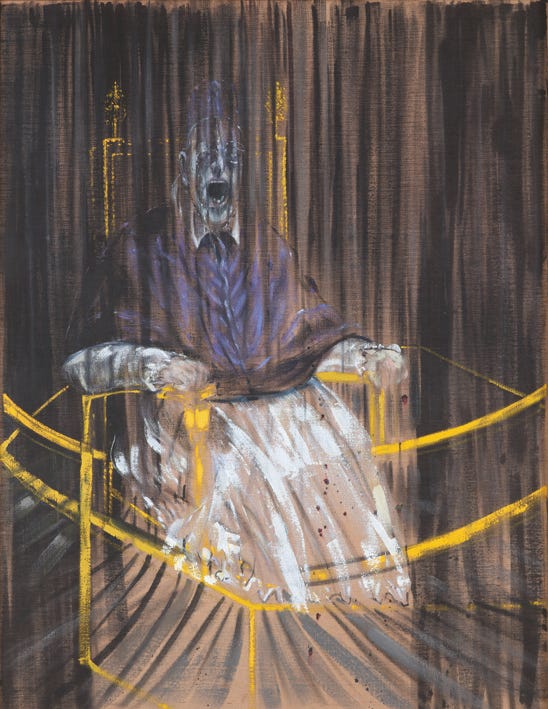
If Klimt teaches us that beauty requires context, Francis Bacon teaches us something perhaps even more important. He teaches us that aesthetic is incapable of hiding who we are.
Bacon’s work is some of the most disturbing art ever created. His figures scream. Their faces dissolve. Their bodies twist, distort, and seem perpetually caught somewhere between formation and destruction. His paintings are often violent, claustrophobic, and deeply unsettling. They feel as though they exist in a world where flesh itself has become unstable. Yet despite all of this, or perhaps because of it, his work is extraordinarily convincing. Nobody has ever accused Francis Bacon of being superficial. Nobody has ever looked at one of his paintings and thought that he was simply following a trend. Every canvas feels authentic because every canvas feels inseparable from the life that produced it.
Everything that shaped Bacon eventually found its way into his work. His difficult relationship with his father, his experiences of humiliation and rejection, his homosexuality, his fascination with violence, his attraction to risk, and his observations of post-war Europe all became part of the visual language he developed. Even his love of gambling found its way into his paintings. This may sound strange at first, but one of the things Bacon spoke about repeatedly was chance. He loved uncertainty. He loved accident. He loved the idea that a painting could become something other than what he originally intended. Rather than meticulously planning every detail, he often approached painting as a kind of encounter with unpredictability, allowing the process itself to determine where the work would go.
Once you know this, you begin to see it everywhere. His figures rarely feel still. They seem caught in motion, suspended in some fleeting and unstable moment. Faces blur, bodies stretch and distort, and forms appear to be simultaneously forming and disintegrating. Everything feels temporary. Everything feels uncertain. Everything feels as though it exists only briefly before disappearing. There is a remarkable sense of movement in his work, but it is not the graceful movement we might associate with dance or beauty. It is the movement of anxiety, pain, confusion, desire, and vulnerability. Bacon painted people the way life often feels: unstable, unpredictable, and difficult to comprehend.
This is one of the reasons I think his work remains so powerful. Bacon understood that there are certain experiences that resist language. Grief does this. Fear does this. Desire does this. There are moments in life when human feeling becomes so overwhelming that words seem inadequate. We struggle to describe what is happening inside of us because there simply are no words capable of containing it. Bacon painted those moments. He painted what it feels like to suffer. He painted what it feels like to be overwhelmed by existence. He painted what it feels like to be trapped inside a body and subject to all of the chaos that comes with being human.
Even his influences become visible if you look closely enough. Bacon admired Picasso enormously, and although their work differs dramatically, Picasso’s influence is impossible to ignore. Picasso’s willingness to distort reality in pursuit of something deeper gave Bacon permission to do the same. The abstraction, the fragmentation of form, the refusal to accept appearances at face value…all of these concerns can be traced back to artists who came before him. Once again, context explains everything. The aesthetic did not emerge from nowhere. It emerged from a life, from a series of influences, from particular experiences, and from ideas that Bacon could not stop returning to.
This is precisely why I think so many people struggle when attempting to develop a convincing aesthetic of their own. They focus entirely on appearances while ignoring the forces that create appearances in the first place. They copy hairstyles, clothing, interior design, social media aesthetics, and entire lifestyles, hoping that by assembling the correct collection of visual signals they will somehow arrive at a compelling identity. Yet something almost always feels wrong. The result resembles an aesthetic, but it rarely feels authentic. It feels borrowed. It feels imitated. It feels as though somebody began with appearances and worked backward, when every truly memorable aesthetic develops in the opposite direction.
Imagine trying to recreate Francis Bacon’s aesthetic without understanding anything about Francis Bacon. Imagine painting distorted figures because they look dramatic or interesting. Imagine copying his color palette because it feels emotional. Imagine reproducing his compositions because they appear unique. The result would almost certainly feel hollow. It might resemble Bacon’s work on the surface, but it would lack the thing that made his work worth looking at in the first place. It would lack the spirit behind it.
Spirit is what makes aesthetic convincing. The most memorable aesthetics are never assembled from trends, nor are they the result of somebody selecting a visual category and attempting to inhabit it. They emerge naturally from a way of seeing the world. They are the visible consequence of values, interests, fears, desires, memories, and ideas that already existed long before anybody considered what color to paint a wall or what style of clothing to wear.
That is what makes Francis Bacon such an important artist to study. Whether one loves his work or hates it, every painting feels honest. The aesthetic is inseparable from the man who created it. His worldview became visible. His life became visible. His obsessions became visible. In the end, the paintings reveal exactly who he was.
Great aesthetic should do the same. It should not conceal who you are. It should reveal you.
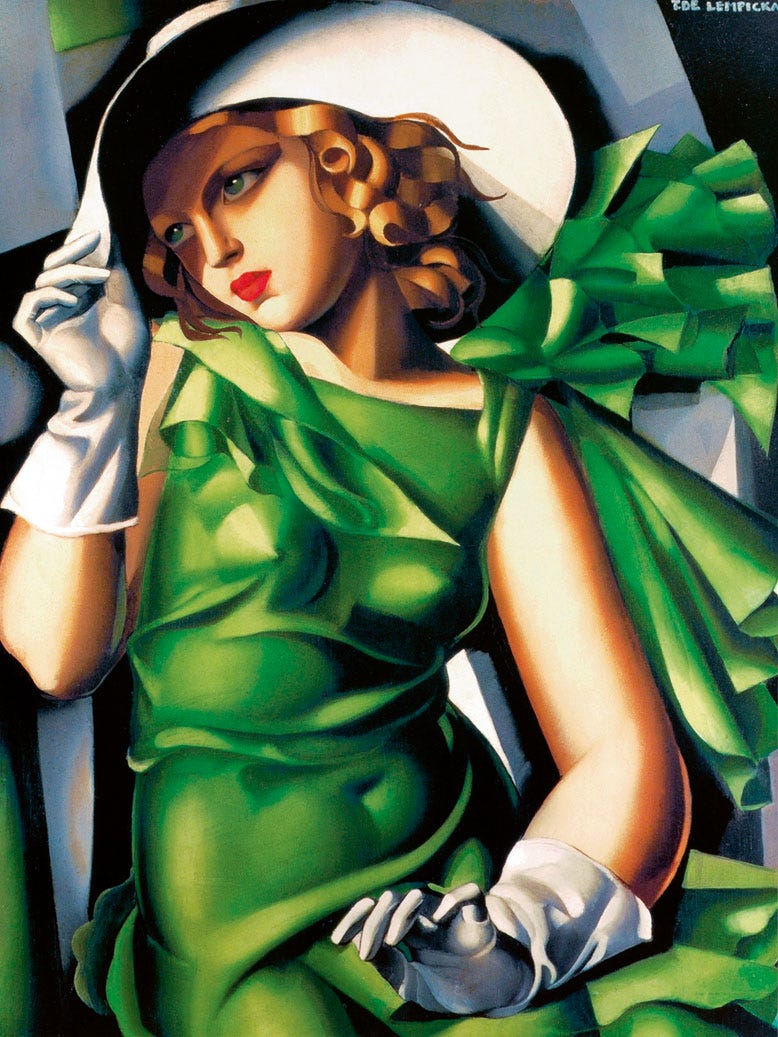
If Francis Bacon teaches us that aesthetic reveals the inner life, then Tamara de Lempicka teaches us that aesthetic can become the spirit of an entire era.
Few artists have become so synonymous with a particular moment in history. Lempicka painted during the Roaring Twenties, a period defined by glamour, excess, confidence, luxury, and transformation. Women’s roles were changing. Ideas about beauty were changing. Society itself seemed intoxicated with possibility. It was a world that felt simultaneously permanent and fleeting, as though everybody understood that they were living through something extraordinary but knew it could not last forever.
That feeling is everywhere in her work.
When people first encounter Lempicka’s paintings, they often focus on the luxury. They see expensive clothing, elegant women, polished surfaces, and a kind of self-assurance that seems almost larger than life. But what makes her work so memorable is not the luxury itself. It is the conviction behind it. Her subjects do not merely possess confidence; they embody it. They occupy space with certainty. They appear as though they have fully accepted who they are and have no intention of apologizing for it.
This quality did not emerge from nowhere.
Like every great artist, Lempicka was shaped by her influences. One of the most significant was the Italian Mannerist painter Agnolo Bronzino. His figures possessed a sculptural quality, a smoothness that made flesh resemble polished stone. That influence appears throughout Lempicka’s work. The skin of her subjects often feels almost marble-like. Their forms are idealized, exaggerated, and monumental. They are not representations of ordinary people so much as visions of an ideal.
What fascinates me about Lempicka is that she understood something many people still struggle to understand today. Beauty is not merely about appearance. Beauty is about conviction.
When we look at her paintings, we are not responding only to color, composition, or technical skill. We are responding to a vision of life. We are responding to confidence, ambition, glamour, independence, and self-possession. We are responding to an artist who knew exactly what she admired and who built an entire body of work around those ideals.
This brings us back to the question of aesthetic.
What Klimt, Bacon, and Lempicka all demonstrate is that aesthetic is never created in isolation. Every great aesthetic has roots. It emerges from influences, experiences, values, interests, and ideas. The artists we admire did not begin by asking themselves what aesthetic they should have. They began by engaging deeply with the world around them. They paid attention to what fascinated them, what moved them, what frightened them, what inspired them, and what they believed to be worth pursuing.
The aesthetic came afterward.
This is why I believe so many people struggle to find their own aesthetic. They spend too much time studying appearances and not enough time studying themselves. They search for visual answers to questions that are ultimately philosophical. They ask what they should wear before asking what they value. They ask what style suits them before asking what kind of life they wish to create.
The truth is that your aesthetic is already forming, whether you realize it or not. Every book you return to, every city you dream about, every artist you admire, every object you keep, every piece of music you replay, and every ideal you refuse to abandon is quietly contributing to it. Your aesthetic is not something waiting to be discovered on a mood board. It is being shaped every day by the things you choose to pay attention to.
Perhaps this is why art is such a useful teacher. Art reminds us that beauty always comes from somewhere. It has a history. It has influences. It has a philosophy. The most beautiful things are never random. They are the visible expression of something deeper.
So if you want to find your aesthetic, stop looking for an aesthetic.
Look at art.
Look at history.
Look at what you love.
Look at what you cannot stop thinking about.
And then ask yourself a simpler question: if everything beautiful reveals what it values, what do the beautiful things in your life reveal about you?
Because living for beauty is not about surrounding yourself with beautiful things. It is about becoming the kind of person from whom beautiful things naturally emerge.