In Defense of the Useless
Why beauty begins where necessity ends.

Oscar Wilde wrote in The Picture of Dorian Gray that “doing nothing is the most difficult thing in the world, the most difficult and the most intellectual.” It is one of those lines that first appears as a provocation, as many of Wilde’s best lines do, but beneath its glitter there is a serious philosophy. To do nothing, in Wilde’s world, is not to be idle in the vulgar sense. It is to be free enough, cultivated enough, and inwardly disciplined enough to live beyond mere necessity.
The Picture of Dorian Gray is not only Wilde’s most famous novel; it is also one of the great literary expressions of the Aesthetic movement in late nineteenth-century England. This movement gathered around the belief that beauty did not need to justify itself through moral instruction, usefulness, or social improvement. Its creed was simple and scandalous: art for art’s sake. Beauty was not a servant. Beauty was sovereign.
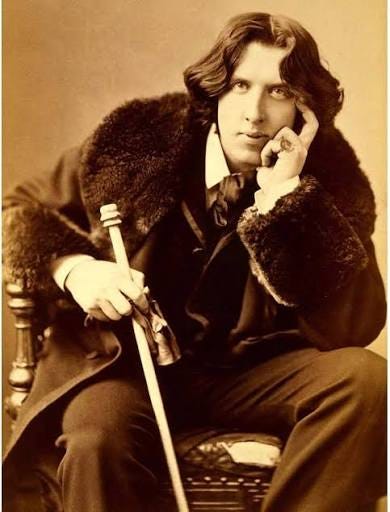
Those who lived according to this philosophy were called dandies. The name has often been flattened into caricature, as if a dandy were merely a vain man in beautiful clothes. But dandyism was never only about dress. It was an attitude toward life, an insistence that the self could become a work of art and that daily existence could be shaped with the same care one gives to a poem, a painting, or a room filled with afternoon light.
Holbrook Jackson, in his essay on dandies, described the dandy as an artist whose medium is himself. His gestures, his clothing, his conversation, his leisure, his refusals, his silences… all of these become materials. The dandy does not simply wear beautiful things. He composes himself through them. His life becomes a series of deliberate arrangements, each one declaring that existence need not be surrendered entirely to practicality.
Charles Baudelaire understood this with even greater severity. For him, the perfect dandy had no profession other than elegance. The love of clothing, ornament, and material beauty was not, in its highest form, mere vanity. It was the visible sign of an inner aristocracy, a discipline of the will, a refusal to be consumed by the ordinary demands of the world. Dandyism, to Baudelaire, approached the condition of a religion.
This is where modern people often misunderstand beauty. They assume that what is unnecessary must also be meaningless. They look at the silk robe, the polished silver, the hour-long walk, the Japanese porcelain, the first edition, the theater ticket, the carefully chosen perfume on the table, and they ask what purpose any of it serves. The answer is that it serves no practical purpose, and that is precisely the point.
The useless is not the same as the meaningless. A life can be filled with gestures that do not contribute to survival and yet contribute profoundly to the soul. A flower arrangement does not feed the body. A poem does not build a house. A candlelit dinner does not alter the machinery of the world. Yet these things remind us that we are not machines built only to labor, consume, and sleep.
Beauty belongs to the realm of excess. It appears when there is enough space in a life for something beyond function. Civilization itself begins at this threshold. Once the ground has been sown, once the walls have been built, once the fire has been protected from the winter wind, the human being begins to decorate, sing, theorize, paint, write, and adorn. Art is born from the moment we are no longer merely surviving.
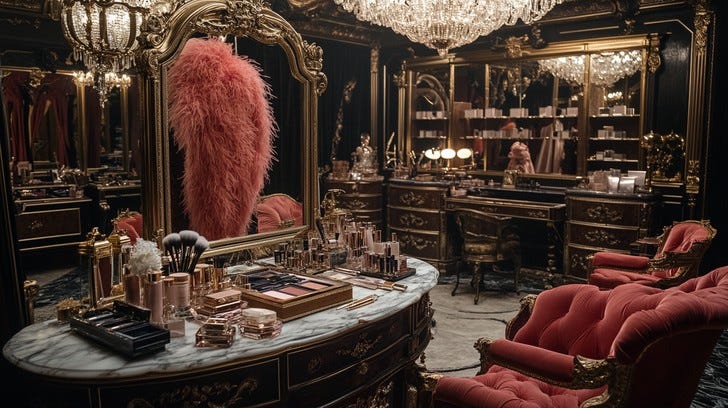
This does not mean that beauty belongs only to the wealthy. Wealth can purchase access, but it cannot purchase orientation. Dandyism, at its highest, comes from within. It is not simply the possession of expensive things, but the discipline of noticing, choosing, arranging, and elevating. One may have great means and still live vulgarly. One may have modest means and still possess an aristocracy of attention.
The true dandy is not defined by money, but by will. He wills beauty into the ordinary. He refuses to let the day remain a sequence of dull obligations. He turns dressing into ritual, conversation into performance, leisure into contemplation, and taste into a moral intelligence. He understands that life is not made beautiful by accident. It must be orchestrated.
Wilde’s phrase, “doing nothing,” must be read in this spirit. He does not mean the blank idleness of a person without thought. He means the cultivated leisure of a person who has enough interior life to make stillness fruitful. To do nothing beautifully is to sit with an idea long enough for it to become art. It is to linger in conversation, to think without immediate application, to allow the mind to wander beyond usefulness.
In The Picture of Dorian Gray, the most memorable conversations are often useless in the practical sense. The characters discuss marriage, pleasure, morality, beauty, youth, and corruption with no intention of solving anything. Their speech is not meant to produce a policy, a plan, or an outcome. It exists as an art form. It is wit as ornament, thought as performance, language as luxury.
There is a line in the novel where country life is mocked as a place where people rise early because they have so much to do and go to bed early because they have so little to think about. The cruelty of the remark is obvious, but so is the insight beneath it. A life consumed entirely by tasks leaves little room for contemplation. It produces efficiency, but not necessarily depth. It may keep the body moving while leaving the mind unfurnished.
The modern world worships usefulness with an almost religious devotion. Every hour must be optimized, every habit monetized, every pleasure justified by productivity, wellness, or personal branding. Even beauty is often forced to explain itself as confidence, networking, visibility, or self-care. We are uncomfortable with anything that exists simply because it is beautiful.
But the highest things in life are often the least practical. Philosophy is not practical. Poetry is not practical. A symphony is not practical. The slow cultivation of taste is not practical. Love, in its purest form, is not practical either. Yet without these useless things, human life becomes spiritually impoverished, no matter how productive it appears from the outside.
This is why I defend the useless. Not because I believe in frivolity for its own sake, but because I believe human beings require more than function. We need symbols, ceremonies, textures, perfumes, music, meals, paintings, gardens, and rooms that make us feel that life has been touched by meaning. We need moments that do not improve our efficiency but deepen our experience of being alive.
To live for beauty is to sanctify what the world dismisses as excessive. It is to understand that the superfluous may contain the sacred. It is to pour tea into the beautiful cup even when a plain mug would do. It is to dress with care even when no one important will see you. It is to create an atmosphere around your life because atmosphere is one of the ways the soul recognizes itself.
There is, of course, danger in this philosophy. Beauty can become vanity. Taste can become snobbery. Leisure can become decadence without depth. The dandy can become a parody of himself if he mistakes appearance for essence. But the possibility of corruption does not invalidate the pursuit. Every high thing casts a shadow.
The answer is not to abandon beauty, but to deepen it. Beauty must be joined to intelligence, discipline, and inwardness. The beautiful life cannot be merely decorative; it must be symbolic. It must point toward something beyond possession. Otherwise, elegance becomes costume, luxury becomes emptiness, and aestheticism becomes nothing more than an expensive form of boredom.
Yet even boredom has its place in the history of beauty. Ennui appears often in the literature of decadence because it is the condition of those who have been spared immediate necessity and must then confront the vastness of their own interior life. Boredom can become dangerous, but it can also become generative. In the empty space left by the absence of urgency, contemplation begins. From contemplation, art emerges.
This is why the great aristocratic art of doing nothing is not really nothing at all. It is the art of making room. Room for thought, for refinement, for beauty, for perception, for the slow transformation of life into something worthy of attention. The person who knows how to do nothing well may, in fact, be doing one of the most difficult things: resisting the demand to reduce existence to labor.
The woman who lives for beauty understands this. She does not confuse usefulness with value. She knows that a life can be orderly, ambitious, and disciplined while still leaving space for the unnecessary. She does not apologize for wanting beauty around her, because she understands that beauty is not an escape from seriousness. Beauty is one of the forms seriousness can take.
The world will always mock what it cannot measure. It will call beauty frivolous, ritual excessive, elegance impractical, and leisure indulgent. But the world has always depended on the very things it dismisses. It remembers civilizations by their temples, paintings, poems, garments, gardens, music, and myths. It does not preserve their spreadsheets.
In the end, perhaps Wilde’s “useless” things are not useless at all. Perhaps they are simply useless to the machinery of survival, and profoundly useful to the making of a soul. The purpose of beauty is not always to do something. Sometimes its purpose is to reveal something: that life can be more than endurance, more than productivity, more than obligation.
To live beautifully is to insist that existence deserves ornament. It is to believe that the smallest gesture can become a ceremony when done with attention. It is to understand that the useless cup, the useless flower, the useless poem, the useless hour spent thinking beneath a tree may be the very things that rescue us from becoming useful and nothing more.