
There are evenings when the world becomes too loud. Not only in sound, but in spirit. Other people’s opinions, moods, expectations, and disruptions begin to gather around the mind like static, and the self can feel less like a sanctuary than a room everyone has walked through without permission.
When this happens, I do not try to reason my way back into peace. Reason is often too thin a tool for certain forms of unrest. There are moments when the nervous system does not need an explanation, but an atmosphere. It needs beauty arranged around it until the soul remembers its own proportions.
For me, beauty and art are not decorations added to life after the serious things have been handled. They are instruments of return. They bring the self back into order because they belong to a higher register than irritation, confusion, envy, frustration, or the petty theater of daily life. A great painting, a strange novel, a piece of sacred music, a room lit only by candlelight…these things lift the mind out of the low weather of the ordinary.
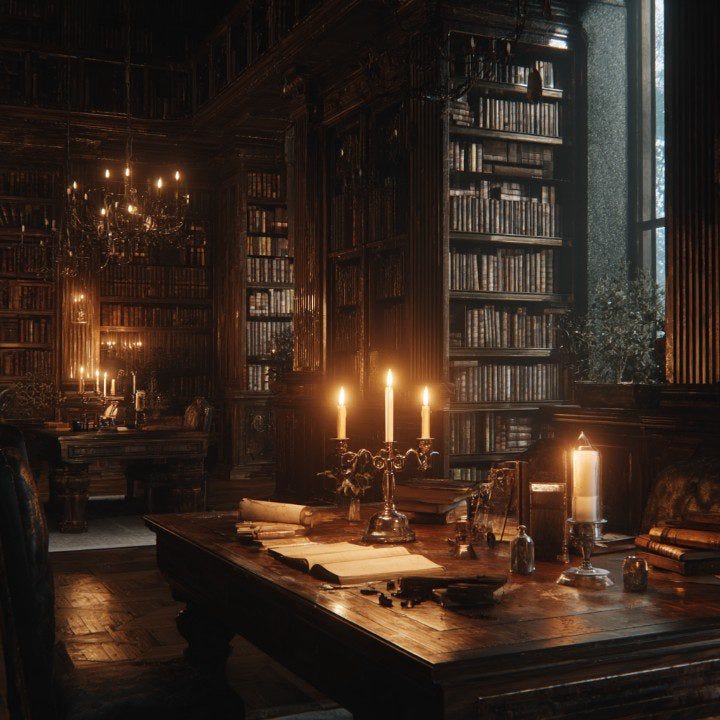
This is not escapism in the shallow sense. Escapism is what we do when we want to avoid ourselves. Beauty, when approached with reverence, does the opposite. It does not remove us from reality; it restores our capacity to experience reality without being consumed by its ugliness.
On nights like this, I like to be alone. Solitude is not loneliness when it is chosen with intention. It becomes a chamber of repair, a private chapel where the self can become whole again. I close the door, lower the light, and begin assembling the conditions under which I can return to myself.
I often start with the body. I put on lingerie not for seduction, not for display, not for anyone else’s gaze, but because beauty worn closest to the skin has a particular intimacy. There is something profoundly centering about wearing something well-made and beautiful in complete privacy. It is a way of telling the body that it is not merely something to be managed, measured, or improved, but something worthy of adornment.
Then I choose what I want to hear. Sometimes it is an audiobook, something decadent and strange, something that seems to come from another moral climate entirely. Against Nature is ideal for this kind of evening because it understands the spiritual uses of artificiality. It understands the desire to withdraw from the vulgarity of the world and create an interior universe governed entirely by taste.
Reading, at its best, is not measured by the number of pages completed. A good reading day can be made by one sentence. It can be made by a phrase that arrests you so completely that you stop, search, compare, remember, and follow it into another book, another painting, another century. The purpose of reading is not always progress. Sometimes it is encounter.
This is why I love to let one work lead me into another. An audiobook may send me to an art book. A sentence may send me to a letter. A painting may send me to a diary, a movement, a theology, a color. The mind, when properly fed, does not move in a straight line. It wanders through beauty as if through rooms.
I may reach for James Jean, Picasso’s Blue and Rose Periods, Bosch, or whatever image seems to answer the mood of the evening. I like to look at art slowly, to give my attention to color, technique, composition, and atmosphere. I like to wonder what the artist was suffering, worshiping, rejecting, or trying to make visible. Art is consoling because it reminds us that human beings have always needed to transform their private intensities into form.
The concerns of artists often feel mercifully distant from the small humiliations of daily life. Their questions are theological, ideological, symbolic, and conceptual. They are concerned with death, desire, heaven, flesh, light, madness, myth, and the soul. To place the mind among these questions is to be temporarily rescued from the tedious immediacy of whatever has been bothering you.
Fragrance is part of this ritual because scent has a power that is almost supernatural. It can summon memory without language. It can return us to a room, a person, a season, or a version of ourselves we thought had disappeared. Of all the senses, smell may be the most mysterious because it is both intimate and elusive; we remember it deeply, but cannot fully recreate it in the mind.
I prefer to have one signature fragrance. There is something elegant about being known by a single atmosphere, about allowing one scent to gather meaning over time until it becomes part of your private mythology. A signature fragrance can become a kind of invisible architecture around the self. It enters the room before explanation and remains after departure.
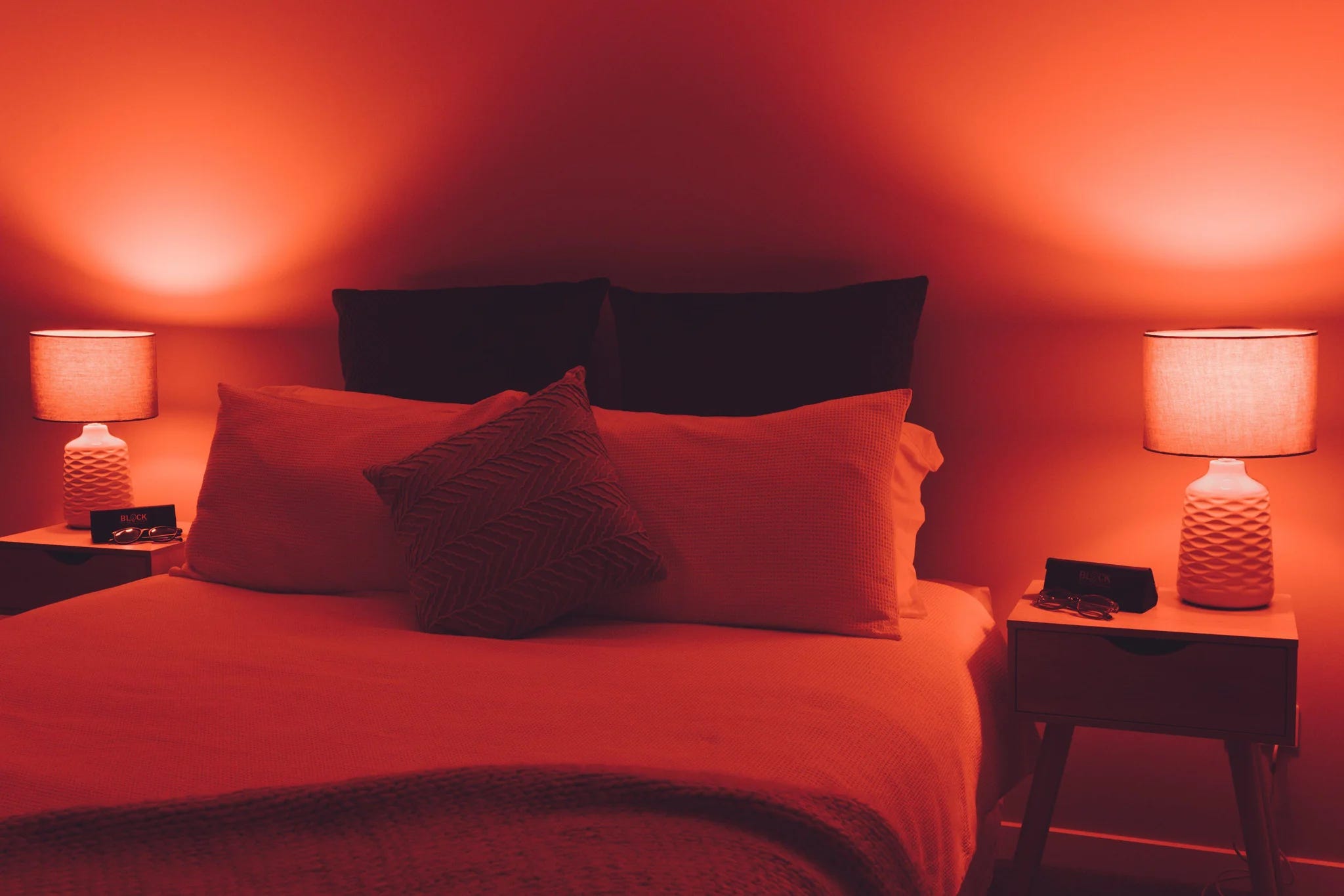
Light matters too. I do not like harsh overhead light when I am trying to return to myself. I prefer candlelight, or a red light that floods the room with a theatrical artificiality. Red is my chosen color because it feels alive, interior, and ceremonial. It makes the room feel less like a room and more like a chamber of feeling.
Artificial light has its own romance. It separates the space from the ordinary world and makes the evening feel composed rather than merely endured. A room washed in red light, scented with fragrance, softened by candles, and filled with music becomes more than a place to sleep. It becomes an environment for restoration.
Herbal tea belongs beautifully to this ritual. There is something grounding about holding a warm cup while the mind begins to settle. The pleasure is not in intoxication, but in slowness, warmth, and taste. A well-steeped tea can become a small ceremony, a way of asking the body to soften while the mind travels elsewhere.
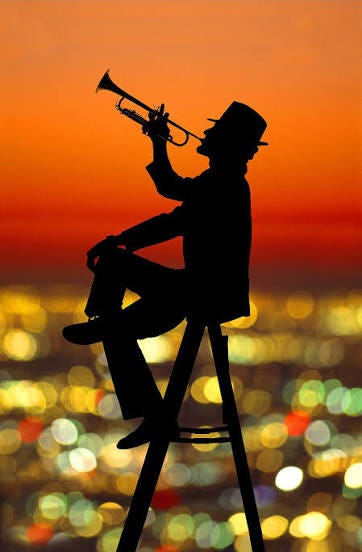
And then there is music. Not background sound, not something to fill silence, but music as atmosphere and invocation. Jazz can do this in a way few forms can. It has the intimacy of a dim room, the intelligence of improvisation, and the melancholy of someone telling the truth beautifully without explaining too much.
Jazz understands the elegance of restraint. It can hold longing without collapsing into sentimentality. It can make solitude feel inhabited rather than empty. A trumpet, a piano, a low voice, a brush against a drum… these sounds can rearrange the emotional furniture of a room.
There are also times when I want something more sacred, something that feels almost inhuman in its depth. Russian church choir music has this effect on me. It feels less sung than summoned. The voices seem to rise from stone, incense, candle smoke, and centuries of sorrow. Listening to it, I can imagine a vast Gothic cathedral blackened with age, lit only from within, full of shadows and ghosts.
This kind of music consoles without speaking directly to the wound. It does not say, “Everything will be fine.” It says something older and more serious: that grief, beauty, longing, and reverence have always belonged together. It places private discomfort inside a much larger human inheritance. Suddenly, whatever troubled me feels smaller, not because it has been dismissed, but because it has been placed in proportion.
By the end of such an evening, I feel less alone. Not because anyone has entered the room, but because I have gathered around myself the artists, writers, musicians, painters, and ghosts who have always been my companions. They are not alive in the ordinary sense, but their works remain as presences. To read them, hear them, and look at what they made is to sit among them.
This is one of the great consolations of an artistic temperament. You are never entirely without company if you know how to commune with beauty. A painting can keep you company. A book can steady you. A song can understand you before you have found the words. Art becomes a form of friendship across time.
There is a harmony that arrives when everything is arranged correctly. The body is dressed beautifully, the room is lit softly, the fragrance is in the air, the tea is warm, the music is playing, and the mind has been given something worthy to contemplate. It is not exactly meditation, though it produces a similar stillness. It is contemplation through beauty.
The self does not return through force. It returns through invitation. It returns when the world has been quieted enough for the soul to hear itself again. This is why ritual matters. This is why atmosphere matters. This is why beauty matters.
To live for beauty is to understand that peace is not always found by emptying the mind. Sometimes peace is found by filling the room with what is noble, strange, exquisite, and beloved. Sometimes the way back to yourself is through a candle, a sentence, a painting, a cup of tea, a red light, a voice from another century, and the decision to make solitude beautiful.