
Beauty, to me, has always been both instinct and pursuit. Before I had the language for it, before I knew the histories, movements, names, and philosophies attached to it, I knew what I liked. I knew when a face, a room, a dress, a voice, a morning, or a gesture had the quality I was looking for. Beauty was never abstract to me. It was always something I recognized before I understood.
Over time, my idea of beauty became an amalgamation of many things. It was shaped by art, fashion, women I admired, places I longed for, books I read, and the private standards I began to build for myself. But beneath all of those influences, there has always been something deeply personal. Beauty is relative in the sense that each soul must discover its own altar, but it is not random. What we call beautiful often reveals what we secretly worship.
I do not believe beauty is something one achieves once and then possesses forever. Beauty must be chased, renewed, protected, and reimagined. Like anything natural, it is subject to time. A flower opens and fades. A body changes. A room gathers dust. A perfect moment arrives and then disappears. This does not make beauty less meaningful. It makes it more urgent.
To live for beauty is to accept that beauty is not a destination, but a devotion. It is something one returns to again and again, especially when life becomes difficult. Some people keep a cross in their home, something to look at each morning for strength, faith, and endurance. I understand this impulse because I do something similar with beauty. I keep beautiful things around me as reminders that the world is still worth meeting.
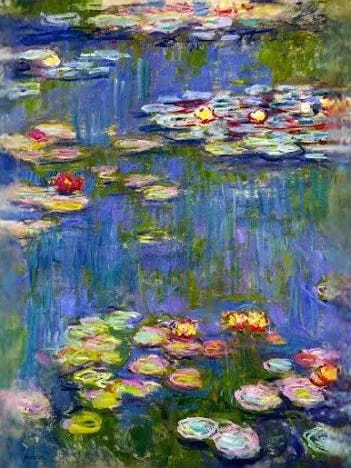
Beauty can become a reason to rise in the morning. It can remind you, even in the darkest periods of your life, that there is still something outside the pain. Even when beauty cannot be found immediately, it can be imagined. The imagination can pull beauty out of thin air. It can create a room, a future, a face, a life, an atmosphere, and then begin teaching the body how to move toward it.
My desire is to be surrounded by beauty so completely that all of my senses feel awakened. I want beauty in what I see, hear, touch, smell, and taste. I want the sheets, the tea, the music, the light, the pastry, the teacup, the incense, the candle, the room, the morning birds, and the direction of the sun to participate in the same private order. This may sound excessive, but excess is often what separates survival from living.
I have always wanted a certain amount of control over my life. Not control in the anxious sense, but control as composition. I want to choose the atmosphere I live inside. I want to decide what enters my eyes, what touches my skin, what fills my home, what sound greets me in the morning, and what fragrance lingers in the air at night. A beautiful life does not happen accidentally. It is arranged.
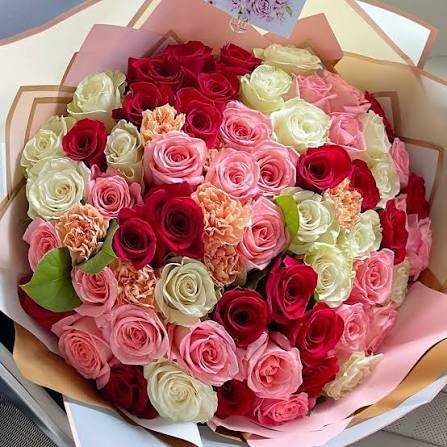
This desire extends even to the body. I want my body to be graceful, not merely attractive. I want my movements to have refinement, even in ordinary tasks. I have thought about studying dance or ballet simply to force my body into a state of greater elegance. There is something profound about training the body until beauty is no longer something placed upon it, but something expressed through it.
People often mistake this kind of devotion for superficiality. They assume that to care deeply about beauty is to care only about surfaces. But the surface is not always shallow. Sometimes the surface is where the soul makes itself visible. A gesture, a posture, a room, a garment, a fragrance, a meal, a face, a way of walking… these are not meaningless details. They are the visible language of an inner life.
I believe beauty has a spiritual dimension. I do not think every person who pursues beauty is vain. Some are seeking divinity. Some are trying to live in accordance with a higher order. Beauty, at its best, feels like harmony made visible. It feels like the physical world briefly obeying a law more perfect than the one we usually live under.
There are moments when beauty feels almost molecular to me, as if it belongs to some hidden order of the universe. It is not merely decoration. It is arrangement, proportion, rhythm, and light. It is the feeling that something has found its proper place. This is why beauty can be so calming. It suggests that chaos is not the only truth.
I sometimes wonder if the pursuit of beauty changes the person who pursues it. Perhaps the body listens to the imagination more than we think. Perhaps a woman who believes in beauty, studies beauty, surrounds herself with beauty, and disciplines herself toward beauty eventually begins to reflect it. Not because of vanity, but because devotion transforms the devotee.
I was not born with every quality I desired. Many things had to be studied. I had to learn what I found beautiful, what I wanted to become, and what habits, rituals, disciplines, and environments would move me closer to it. In that sense, beauty has been a school. I am still in training.
That is what beauty means to me. It is not perfection, though I pursue perfection. It is not luxury, though luxury can serve it. It is not appearance alone, though appearance matters deeply. Beauty is the lifelong practice of arranging the self and the world around the possibility of grace.
To live for beauty is to believe that life can be refined. It is to look at the raw material of existence: body, room, morning, sound, hunger, longing, discipline, imagination…and ask what can be made more graceful. It is to understand that beauty is not only something we find. It is something we obey, something we practice, and something we become.
One of the reasons I spend so much time in nature is because it reminds me that beauty doesn’t demand perfection. It asks us to notice, to slow down, and to participate in it.
Our environments quietly become our teachers.