
Ugliness Is A Disease.
Ugliness, like any other pathogen, finds its way into our lives and slowly takes us over from the inside out. A sick society can be felt, much like sickness is felt in our own bodies. However, disease oftentimes doesn’t cause alarm until it becomes visual. Once it does make its way to the surface, it’s usually already in full swing. In a human being, this is represented by a bump a rash or legion. Out in the world, a disease takes the form of a structure. It can be a sky scraper, a work of art, a bridge and like disease within our bodies, a person can observe a building and recognize that it is foreign and invasive… that there is something wrong. I believe that ugliness is a disease, and I think it has pervaded our world. I think it has done this in many ways but for now, I’m going to limit myself to writing about the environment and architecture.
On the most basic level, science will tell you that we respond to physical ugliness with revulsion because we instinctively believe that ugliness is an identifier of disease. Of course these studies are mostly referring to humans and animals physical attributes, I would take it one step further and say that ugliness can be an identifier of disease of the mind. Our architecture, and surroundings today reflect a sick society. Of course in a viscous cycle, the ugly surroundings that we create in turn cause us to conduct ourselves differently… for the worse. What starts out as one architect with an awful idea, an ugly idea, and maybe it’s a cost-efficient idea, maybe it’s an idea that can be executed quickly. Maybe it solves a whole variety of different functional issues, and therefore this person does not think that this idea is a bad idea, and they actually think they’re coming from a good place. This idea becomes manifested in a building. You could call it a pathogen buried in concrete. And so the years go by, and each person who passes by this building takes a little piece of that building with them, a little piece of that that hideous idea with them. That idea spreads because those people are affected by that building. Slowly but surely, the idea spreads to other people, and then you start to see a whole array of those ugly buildings, and what was once latent is now a full-blown infection.
Ugliness affects us. It affects us like a plague does. It behaves like a plague. I say that because once it’s understood in this way, it’s very easy to identify the stages of its progression and therefore figure out when it’s time to intervene, when it’s time to take action. By taking action, I mean bringing beauty back into our lives and prioritizing beauty. Beauty in a world which is plagued by ugliness is the cure, one that we can all afford, too. A little bit of beauty, or a lot, even a conversation about why we need beauty is enough to begin the work of the cure. There are many studies on human behavior in relation to ugliness and beauty, particularly when it comes to environment.
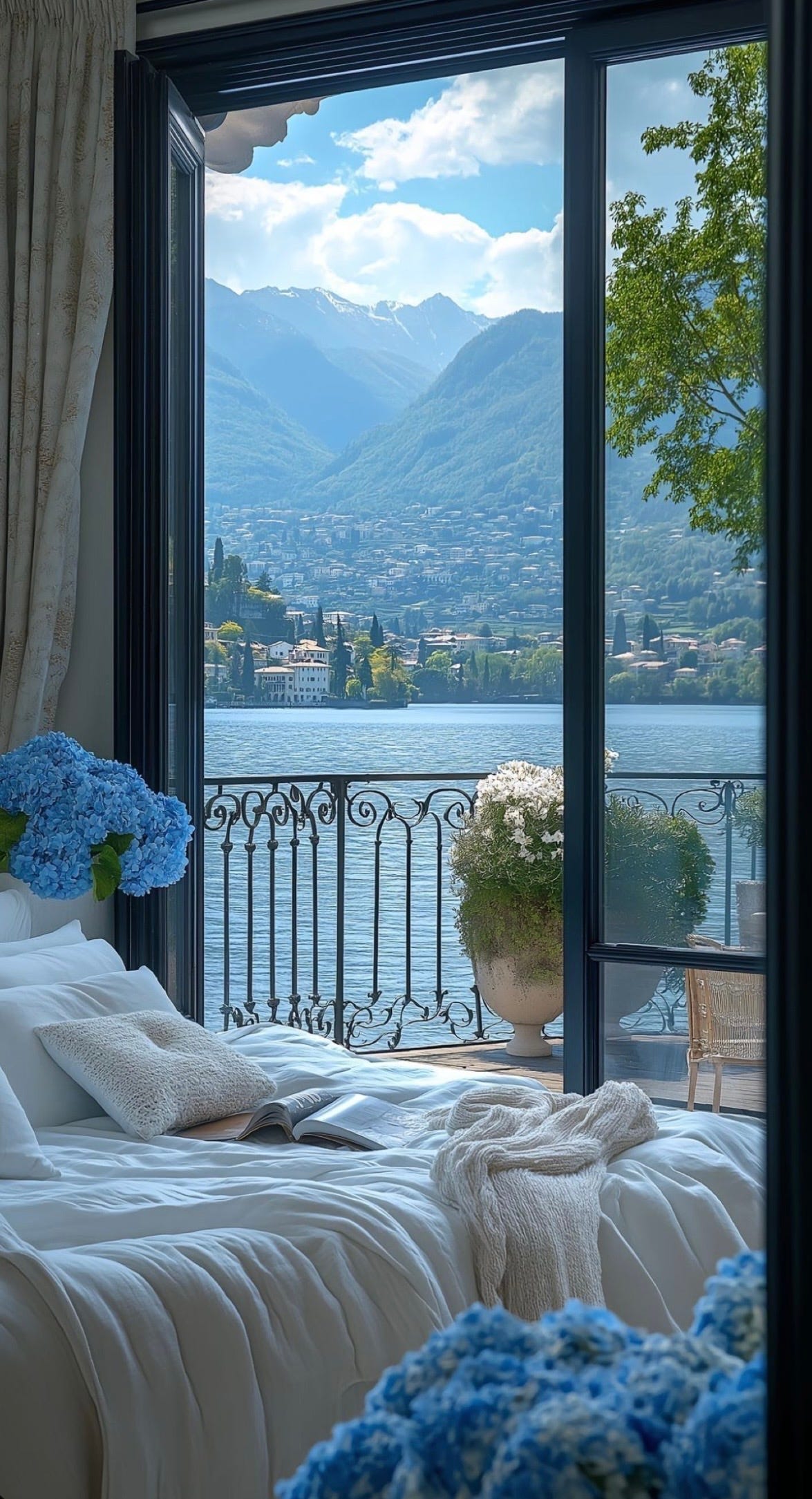
We have Roger Ulrich’s 1984 study, where patients recovering from surgery recover more quickly when they’re placed in front of a window with a scenic natural view. There is also Maslow’s study in 1956, where the ugliness or beauty of a room changes the way that a subject perceives energy and well-being in pictures of others, in headshots of people. Interestingly enough, this research only began around the 1950s onward, and Maslow said this himself in the introduction of the study I just mentioned, that the impact of surroundings and aesthetics on people had little to no research. It seems to me that people, for a long time, just intrinsically knew that beauty was a necessity. It didn’t matter if it was architecture in cities, or if it was a church, or if it was in their own home. A lot of beauty was tied to religion, but beauty’s also been a very clever and very useful political tool.
However, we live in a very different world now, don’t we? Our cities are larger, religious ties are weakening. Even politically, I think that people are confused and they seem to feel aimless. And of course, industry takes precedence over most things. It seems that we had forgotten that beauty was necessary to our general well-being, as if it was kind of hidden behind functionality and instant gratification. And while yes, there are other factors that are the cause of that, having disorder around you all the time, or boring buildings, ugly buildings, ugly environments, certainly contribute to a mental illness, mental dissonance. It isn’t to say that modern design does not have its pros: It definitely does. However, a lot of it can be quite minimalist and elegant, and that is often misunderstood and abused by the masses whenever it’s mass produced. Eventually, it’s defaced by laziness and selection of more widely appealing design, which favors less creative solutions and less tedious solutions to problems.
Now, it’s not even that these buildings are all hideous. The problem with most of them is that they are awfully boring. Beauty has always been something that stimulates us. Beauty is life affirming, thrilling, incomprehensible. It takes many forms. That’s why it inspires us to be better people. It inspires us to get out of bed. It surprises us. It gives us hope for a better world. Of course, boring doesn’t do that for you. Boring is a flat line, monotony, predictability, loss of interest, loss of hope. It is for this reason that I believe that boring surroundings within the category of ugly cause us great harm. Boring is a strain of dangerous disease. Boring is often called harmless, so it’s left unchecked, like many diseases. Boring, a cousin of ugliness, represents apathy, lack of drive, and eventually a kind of spiritual or metaphorical death, sometimes a literal death. There’s nothing harmless about that.
The Cut did a nice little article on the effect that boring buildings have on us. This article was talking about the massive Whole Foods that opened up on East Houston Street in Lower Manhattan, and how it negatively affected people who had to witness that and walk by it every day. They linked being surrounded by a growing number of boring buildings to higher stress levels and even a rise in ADHD. They talked about how boring surroundings lack the elements of turmoil and confusion that humans actually desire, because those are components of complexity and thrill; we even desire this from our architecture. All in all, it seems that variety is the healthiest mode of experience. Developer chic buildings do not have this. They are nonetheless boring, and they are boring as a byproduct of many things, like zoning requirements, building codes, cheap materials, cheap materials which are lightweight and can be shipped easily, design that is tried-and-true, generic, uncomplicated, which can be copied and pasted in just about any area with no intervention.
The Bauhaus and modernism in post-war Europe changed the game, possibly irreversibly. This modernism, (which sought to make living, goods, interior design, architecture more affordable) used new materials, which made it easier to mass-produce, mass-manufacture things, so that the average person could rebuild their life and change. It would change their outlook on life. But unfortunately, it is that sentiment that went so wrong. I think we can all agree on this, that even though the modernists had good intentions, they didn’t age well, and their designs are to blame for a lot of the problems that we face today. We are approaching a very dark, very ugly world due to their empathy. It isn’t to say that modern design was not good design at some point. It definitely was.
Now, when I say less creative, when I say the word disease, what building comes to mind when you walk down the street? Which building pisses you off more rationally maybe than others? What does it look like? What is it called? That’s something that I think maybe a lot of people don’t know. They don’t know what the name of that style is. And there are a few names for it, but one that’s quite popular is developer chic.
We’re talking about those housing complexes that seem to have popped up all over, which have notoriously made it difficult to tell which city you’re in because they’re all the same. Developer chic is used to describe this really awful trend in architecture. It’s a term that was coined by Kate Wagner. This breed of building is an unprecedented, malignant invasion on all that we hold dear.
So these buildings look the way they do and have a negative effect on us due to the fact that they are a result of urban planning, whose priorities are a reaction to housing issues, financial problems, and growing populations. So each construction’s only goal is really to house people, to do it cheaply, efficiently, quickly, which inevitably sounds like a band-aid fix to a much larger problem. And when buildings with this criteria become more and more prominent, they start to communicate something verging on nihilistic. If developers in the face of a humanistic problem continue to produce buildings that make us feel depressed and stressed, which are made cheaply and designed to be temporary, buildings which clearly have no appeal to our desire for beauty, what can that possibly say about the direction of our world, of where we’re going? We, as a society, will start to adopt the sentiment which these buildings communicate. What is that sentiment? It can be said as:
“Why even bother”
“Just whatever, I guess that’ll do”
“That’s fine”
Is that the sentiment? That’s what you want your buildings to look like? That’s what you want your buildings to communicate? Because that’s what they’re doing. This is what they scream at us all the time. It’s because of this that I even hate to call developer chic an aesthetic. It’s as close as you can get to non-aesthetic, because although these buildings are made for people, they do not feel like spaces intended for people. They lack the aesthetic hallmarks, the appeal to our senses, to our human walk of life, to beauty.
Beauty is known to have a profound personal impact on us. Beauty is not just subjective, but what we know to be beautiful is also an intimate statement about ourselves, who we are individually. It’s well known that when someone looks in the mirror and does not find themselves to be beautiful, a disconnect forms called dissociation. This dissociation causes us to lose ownership over our appearance. We look at that form in the mirror and we don’t identify with it. If we see ugly buildings all the time, if we are surrounded by more and more ugliness, we will stop identifying with these surroundings, which leads to a notorious sensation of isolation, which modern architecture is guilty of producing. So today, many of us look around and we do not see ourselves anywhere. We feel adrift, looking for a place to call home in places which are designated as housing, places that are supposed to be designed for us to feel at home. But why does that happen? These buildings are so obviously not built based on our desires, on our need for beauty and variety and thrill. So why do they look this way? Why do they look so ugly? The possible reason is because those who built them do not in fact consider us in them at all.
What I’m driving at is that we need beauty now more than ever. We don’t need the kind of beauty that isolates people, which is the other end of this spectrum, but we need a little more of it in the middle to balance things out. The more ugly buildings and ugly surroundings I witness, the more worried I get about those who have to live in them. People that don’t even know anything about architecture, that have no idea what looking at this kind of thing can do to them on a daily basis. I worry about what will change them. How much longer will they live before they come down with a case of the blues where they’re just so diseased enough to even ask what the point of it all is? I hear this in conversation with people all the time already, and with young people.
A society that rejects beauty because it’s too much effort is doomed. And with all of the diseases over the centuries that have taken the lives of billions of people, trillions of people, due to the lack of no known cure, I sure hope we can lift up our head to realize that the cure is right there in front of us, ready to be taken. Beauty is waiting for us. We need only reach for it.
Wow this was incredibly well-written and very necessary, thank you!
I live on a military base, surrounded by ancient and non-inspired architecture, which by definition are cut and paste. I've travelled to bases across the country and the structures, floor plans, and room layouts are both identical and 'institutional chic'. Whilst living and working in these buildings is sub-par, my hope has always been that that once I've saved enough money, I'll live in 'the real world', and abscond into less securitized and prettier spaces.
However as you point out, there has been an encroachment of utility, cost-cutting, and blandness in every facet of our lives. Craftsmanship is becoming not only a thing of the past, but increasingly expensive and esoteric. Beautiful things, made by skilled humans, are expensive things, and in a world with rising wealth-disparity, and soaring cost of living in all sectors, ugly is not only cheap, but accessible to the masses.
Working for the government, I see the effects of this in the order catalogues sent to offices, and the furniture that soon arrives. Couches, desks, and more, all of it is grey, plastic, and uncomfortable. The thing that worries me the most in this is the durability of any of these ugly items. Wood is not just beautiful but it won't exist in a landfill for centuries to come. I look at the shipments of new furniture and I ask myself 'how is this progress? how is any of this better?'
Humans are biophilic creatures, Jonathan Haidt (2024) argues that our sense of ease and serenity from being near or in lush, outdoor spaces, was a result of us (rightly) associating those spaces with life and bounty. The cold steel and secularism of our modern world tries to fill our 'god-shaped hole' with the newest thing, with louder bells and whistles every time, but all we really need is beauty which can be found wider open spaces, with trees, and animals to guide us towards peace and community.