
In the more recent past, many scientists, philosophers, and psychologists have become fascinated by what our possessions say about us, especially in an age of unprecedented consumerism.
Why do we buy the things that we buy?
What do those things say about us?
How do they affect our behavior, our self-image, and our understanding of ourselves?
There has been much written about how we use objects to display personality, signal status, express religious or cultural affiliations, create a sense of home, and reaffirm who we would like to think we are. Nearly two hundred years ago, Hegel argued that human beings project themselves outward into the world. Our possessions become vessels for that projection. They become tools for self-knowledge and self-discovery. Through them, we locate ourselves in the world.
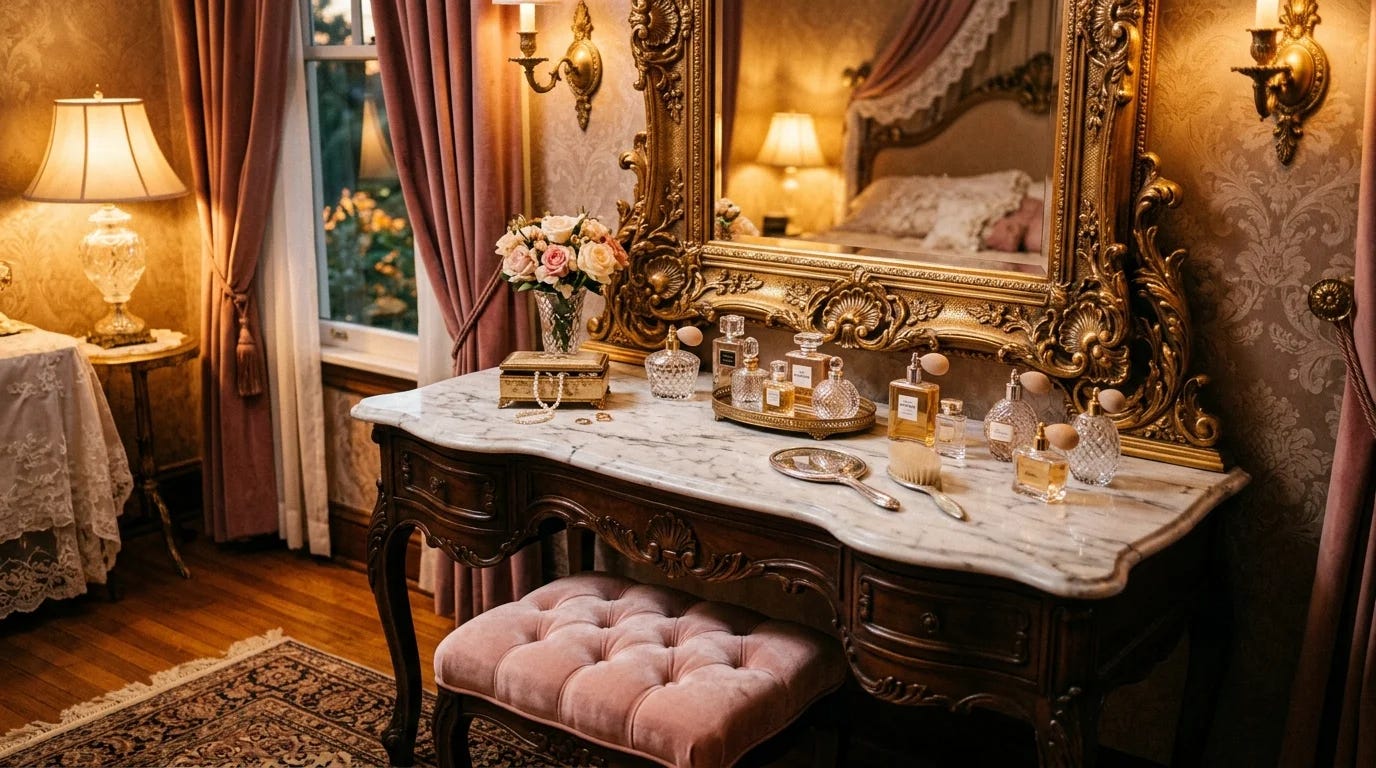
I think that’s true.
Our possessions say something about us.
Our environments affect us.
Even the most trivial and utilitarian object does.
I’ve written before about how beauty and ugliness affect us subconsciously, but I want to go deeper here.
I am a worshipper of beauty.
Much of my work is devoted to understanding how beauty and ugliness affect us, what happens when the material world is filled with one or the other, and why I believe we should rebel against the growing presence of ugliness in everyday life.
I spend a great deal of time trying to convince people that beauty is not a luxury. It is a value. It is something we must actively prioritize if we want to improve the quality of our lives.
Beauty used to be respected.
Now we’ve lost much of our reverence for it.
At the same time, we’ve also lost our connection with one another.
I don’t think that’s a coincidence.
More recently, I’ve started developing a theory about the beautiful and ugly objects we surround ourselves with.
I think objects are a lot like people.
In fact, I think the material world is filled with the ghosts of its creators.
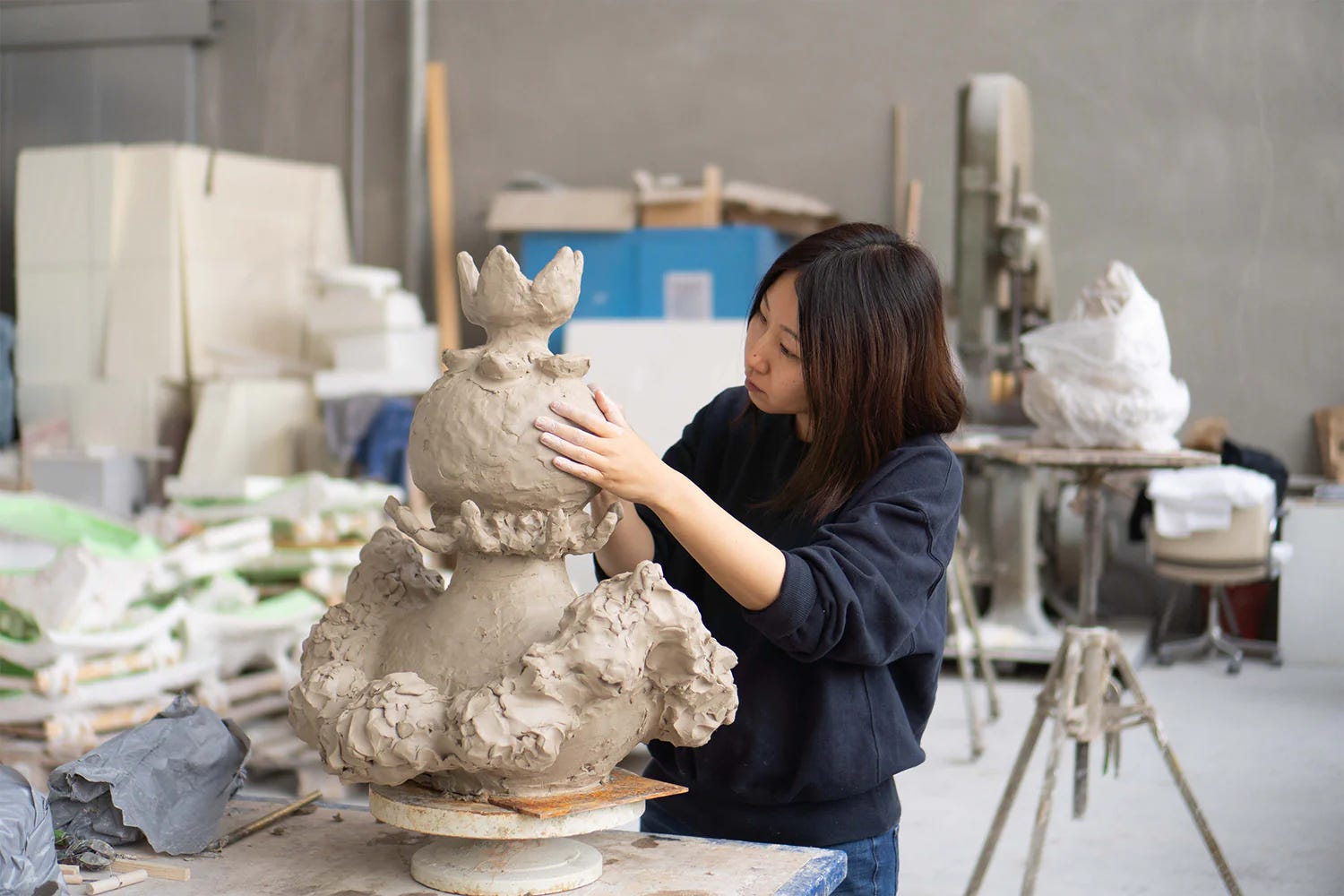
Every object began with a human being.
Someone designed it.
Someone chose its materials.
Someone decided how much care should go into it.
Someone decided whether it would be beautiful or ugly, durable or disposable, meaningful or forgettable.
Their values, tendencies, priorities, and worldview become embedded in the object itself.
I don’t mean this as a poetic metaphor.
I mean it literally.
The fingerprints of the creator remain.
Once you begin looking at objects this way, it becomes easier to understand why I believe a loss of respect for beauty can become a loss of respect for people.
If objects are like people, then our conduct toward objects begins to matter.
Consider the kinds of things that fill modern life.
Disposable.
Mass-produced.
Featureless.
Temporary.
When you look at such an object, why would you repair it?
Why would you care for it?
Why would you contemplate its design?
What is there to contemplate?
It’s just an object.
It was created to serve a function, and once that function has been fulfilled, it can be discarded and replaced.
If it disappeared tomorrow, you probably wouldn’t even notice.
That doesn’t sound like a particularly admirable attitude.
In fact, it sounds like a terrible attitude to have toward anything.
Imagine applying that same logic to another person.
What if friendships were judged solely by utility?
What if people existed only for their function?
What if relationships became entirely transactional?
What if someone became replaceable the moment they ceased being useful?
Many people will say I’m stretching the comparison too far.
Maybe.
But I don’t think it’s a coincidence that as our environments have become increasingly disposable, many of our relationships have begun to feel disposable too.
We often talk about wealth, status, and materialism creating superficial people.
And that’s certainly true.
But I think there’s another problem that deserves more attention.
We no longer consider our things.
We are alienated from them.
Ugliness alienates us.
When something is ugly, we instinctively distance ourselves from it.
We stop looking at it.
We stop thinking about it.
We stop caring for it.
Objects flow into our lives cheaply, quickly, and in overwhelming quantities. They live among us like strangers.
We buy them because they’re affordable.
Or convenient.
Or trendy.
Then we forget about them.
And strangely enough, we seem to be doing something similar with people.
Relationships feel burdensome.
Commitment feels difficult.
Everything feels temporary.
Everyone feels replaceable.
Perhaps that is because we spend our lives surrounded by things that were never intended to last.
I’ve often wondered why we’re so willing to identify toxic people and remove them from our lives, yet we rarely apply the same standard to the objects around us.
Since antiquity, beauty and goodness have been deeply intertwined.
To encounter a beautiful object is, in some sense, to encounter a good friend.
To encounter an ugly object is to encounter something that drains your attention without giving anything back.
Perhaps a liar.
Perhaps a bore.
Perhaps a stranger whose presence leaves no impression whatsoever.
When I make videos encouraging people to get rid of ugly things, some assume I’m advocating materialism.
I’m not.
The point isn’t to accumulate more.
The point is to become more selective.
To become conscious.
To identify the things that degrade your environment and quietly diminish your daily experience.
Not because they’re expensive.
Not because they’re unfashionable.
But because they contribute nothing beautiful to your life.
If objects are like people, then beautiful objects are among the finest people we can choose to spend time with.
They are manifestations of someone’s highest ideals.
Every beautiful object is a small monument to human aspiration.
This is why museums feel sacred.
They are temples.
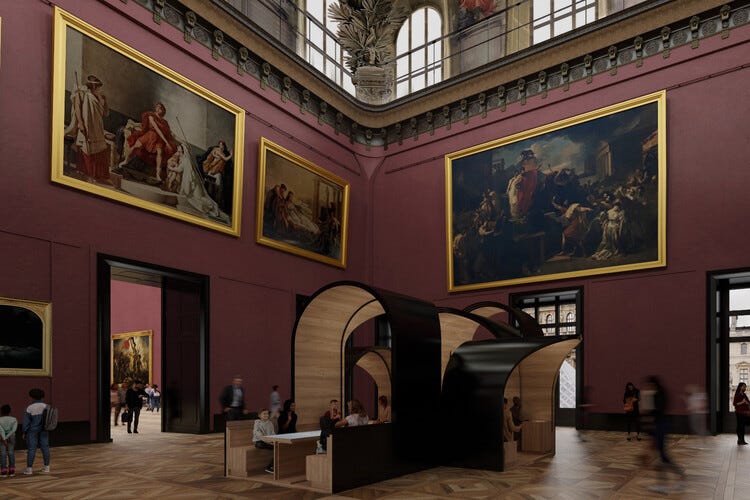
The greatest efforts of painters, sculptors, architects, craftsmen, and visionaries are gathered together in a single space.
When you walk through those galleries, the artists are looking back at you through their work.
They are extending a hand across time.
They are saying, “This is what I believed was worth creating.”
Beauty is deeply personal because, in many ways, beauty is a reflection of ourselves.
We create and collect things in the image of our ideals.
And perhaps poor taste develops when we lose faith in those ideals altogether.
Roger Scruton once suggested that people have stopped believing in beauty because they have stopped believing in ideals.
I think he was right.
A society that excuses ugliness is often a society that has lost hope.
A society that prefers the disposable begins to see itself as disposable too.
Beauty does something different.
Beauty creates belonging.
Earlier I said that ugly objects alienate us.
They remain physically present while feeling emotionally absent.
Like strangers living in our homes.
Beauty does the opposite.
Beauty makes room for us.
It reminds us that we belong here.
A beautiful room feels welcoming.
A beautiful painting feels companionable.
A beautiful object feels less like a possession and more like a friend.
A world that makes room for beauty makes room for you.
That may be the greatest gift beauty offers.
Human life is difficult.
It is chaotic.
It is often painful.
Beauty does not remove suffering, but it gives us somewhere to rest from it.
It transforms sorrow into music.
Loss into poetry.
Longing into art.
It lifts us, if only briefly, above the conditions of ordinary life.
That is why I become frustrated when beauty is discussed only in terms of appearance or unattainable standards.
People spend so much time talking about what beauty excludes that they forget what beauty provides.
Beauty provides hope.
Beauty provides comfort.
Beauty provides meaning.
And perhaps most importantly, beauty provides companionship.
If we began treating objects a little more like people, I suspect we would consume less.
You cannot genuinely care for hundreds of things.
Just as you cannot maintain hundreds of close friendships.
The fewer meaningful things you own, the more attention each one can receive.
The more gratitude you can feel toward them.
The more influence they can have on your life.
Everything started with a person.
Every object you encounter contains traces of someone else’s vision of the world.
You interact with those people every day, whether you realize it or not.
The question is not simply what objects you want in your life.
The question is which people you want influencing you.
Perhaps that is what living for beauty really means: choosing, day after day, to live among things that remind you of the highest version of yourself.